When was the last time you struggled to find change or sign a paper receipt to buy something? That’s becoming increasingly rare. At the checkout, all you need to do is hold your debit card or phone close to the computer. This feature feature makes the shopping process much easier than ever before. This change goes far beyond mere convenience; it fundamentally changes the way money flows within our financial system.
Contactless payments have rapidly evolved from a futuristic vision to a global reality. A simple tap of a credit card, smartwatch, or phone makes shopping faster, easier, and often more secure. To navigate today’s banking world with ease, you need to understand how this system works and why it’s so popular.
Contactless Payment Overview
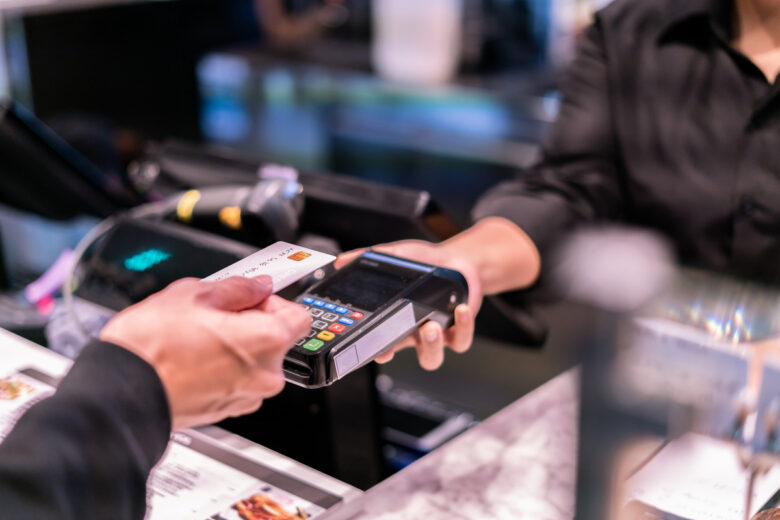
People can shop securely with debit cards, credit cards, smart cards, or other payment devices that use radio frequency identification (RFID) or near field communication (NFC) technology. This is known as contactless payment. Traditional payment methods required swiping magnetic strips or inserting chips. Now, all you need to do is hold your phone close to a payment terminal to complete the payment. This “touch-to-pay” functionality has been implemented on debit cards, smartphones with digital wallets like Apple Pay and Google Pay, and even fitness trackers and other wearables. It reduces physical contact between buyers and payment terminals, significantly speeding up the purchasing process.
The Basics of Contactless Payments
Near Field Communication (NFC) is at the heart of this technology. When you hold a payment device close to a contactless terminal, they communicate wirelessly over a tiny distance (typically less than five centimeters). The payment device has a built-in chip and receiver that sends information to the reader. The reader begins processing the transaction almost immediately after receiving the signal. This short-range communication method transmits encrypted data bidirectionally, allowing payment authorization to be completed even without physical contact. This technology only works when the card or device is within a specific range of the reader. This procedure prevents accidental connections over distance.
Why Contactless Payments are a Good Idea
Using this technology can instantly help you complete transactions much faster. Contactless payments take about half the time it takes to insert a chip card and are much faster than counting cash. This efficiency reduces wait times, which benefits both users and merchants. Besides speed, hygiene is also a key reason for its success. During the global pandemic, the ability to pay without touching a keypad or presenting a card became especially important, as it prevents the spread of pathogens. Furthermore, because it works with smartphones, users need to carry fewer physical cards, as all their financial data is centralized on a secure device.
Security Measures for Contactless Payments
Despite concerns about cybercrime, contactless payments are generally more secure than paying with a magnetic stripe card. One of the technologies used in these transactions is tokenization. With contactless payments, your actual card number is not transmitted. The system generates a special encrypted code, or “token,” that is used only for that transaction. Hackers cannot use the stolen information for future transactions, even if they intercept the signal. Furthermore, due to the short range of NFC technology, it is difficult for thieves to steal information without being close to the user. Mobile wallets often offer additional security through biometric technologies such as fingerprints or Face ID.
Contactless Payments vs. Traditional Payment Methods
A comparison between contactless and traditional payment methods reveals that they operate very differently. Cash transactions, including receiving, counting, and giving change, all require manual intervention, making them slow and error-prone. Magnetic stripe cards contain static data, making them copied by card readers. While chip cards enhance security, they also slow down payments because the card must remain stationary during authorization. Contactless payments combine the high security of chips with faster transaction speeds than cash, filling a gap in traditional payment methods. It eliminates the cumbersome checkout process while offering robust fraud protection.
Contactless Payment Adoption Trends
The use of contactless payments is steadily increasing. Initially popular in countries like Australia and the United Kingdom, its use has exploded in the US in recent years. Major cities like New York and London have already equipped their public transport systems with open contactless payment systems. These systems allow passengers to scan their cards directly at the entry gates. Retailers, previously reluctant to upgrade their terminals, have largely switched to NFC systems due to customer demand. The popularity of wearables has also fueled their spread. People prefer to pay with their watches rather than their wallets while running or traveling.
Future Trends in Contactless Payments
The future applications of this technology extend far beyond shopping. We are moving toward an era where biometric authentication can replace all devices, allowing people to complete payments by simply scanning their face or palm print. Internet of Things (IoT) technology will connect cars, enabling instant payments for gasoline or fast food. As infrastructure expands, people will use cash less frequently, ultimately bringing countries closer to a cashless society. The primary goal will likely remain to improve digital security and protect our information while simultaneously reducing problems.
FAQs
1. Is contactless payment safe?
Yes, most people consider it more secure than paying with a magnetic stripe. Because it uses tokenization technology, your actual card number isn’t transmitted during the transaction. This protects your data from hacking.
2. Do I need a special card for contactless payment?
You need a card with an NFC chip. Look for the “wave” logo on the front or back of your credit or debit card. It looks like a Wi-Fi icon consisting of four curved lines.
3. Are there spending limits for contactless payment?
If your card is lost or stolen, most banks and regions limit the amount you can spend without a PIN. This is usually around €100 or €200.
4. What if I accidentally pay for someone else?
This is highly unlikely. The card reader only needs to be a few centimeters away from the device to read the data, so you need to be practically right next to it to complete the payment.
5. What if I’m using a mobile wallet, but my phone is dead?
Some newer smartphones have a power-saving mode that allows payment and public transport cards to continue working for several hours after the battery runs out. But in most cases, you’ll need to ensure your phone has sufficient power to make payments.