
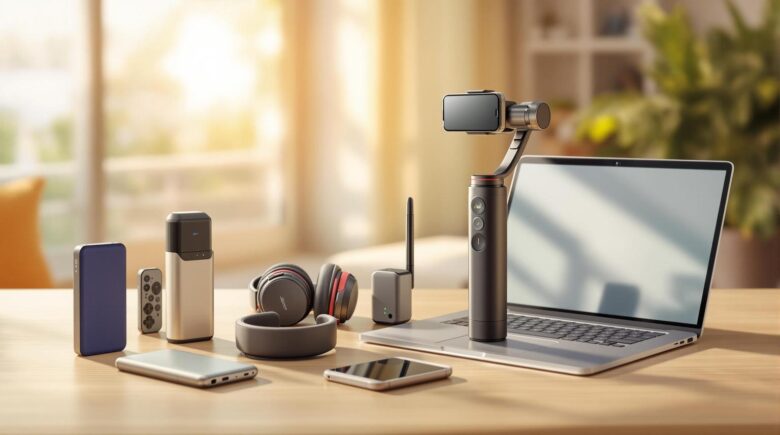
Life today is constantly changing. Whether you’re a digital nomad commuting between cafes, a student dashing across campus, or a businessman always on the go, the ability to work and play anytime, anywhere is no longer a luxury but a necessity. Traditional desks are gone, replaced by backpacks packed with electronic devices, promising independence and efficiency. But truly mobile working is more than just lightweight equipment; it’s about building a toolkit that balances weight, battery life, and performance. This guide explores some of the key components of the wearable technology ecosystem that shapes a mobile lifestyle.
Smartphones: The Digital Control Center
Smartphones are no longer just communication tools. Today, they are the most essential component of any wearable technology device. For the modern traveler, a smartphone combines a camera, maps, an e-wallet, a boarding pass, and a mobile hotspot. When choosing a phone suitable for use on the go, battery life and compatibility with other devices are crucial. You need a device that can withstand a full day of intensive GPS and email use without running out of battery by midday. This allows users to edit 4K video, manage spreadsheets, and even participate in video conferences from a park bench. You can’t live without it; it’s your primary way to connect to the digital world.
Powerful yet Portable Laptops
While smartphones are powerful, laptops remain the best tool for most professionals to get their work done. You no longer have to choose between high performance and portability. There are many “ultrabooks” and laptops with powerful chips on the market that weigh less than 3.3 pounds. For frequent travelers, the size of a laptop is crucial. Lugging a heavy laptop around for hours becomes a burden, leaving you exhausted and regretful. A good travel laptop should have a high-resolution screen that remains clearly visible even in varying light conditions; a comfortable keyboard that prevents fatigue, even after extended use; and, most importantly, a battery that lasts all day. Working for eight to ten hours straight without being plugged in is the key to true liberation for office workers, transforming trains, planes, and waiting rooms into full-fledged offices.
Lightweight and Flexible Tablets
Tablets fall somewhere between smartphones and laptops, each with its strengths. They can perform tasks that neither smartphones nor laptops can. For many, tablets are ideal for reading e-books, watching movies on the plane, or reading the news. But with a detachable keyboard and stylus, a tablet can become a powerful creative tool. For graphic designers, illustrators, and those who need to take notes, tablets are often superior to other devices. They are thinner and lighter than even the smallest computers, making them simple to slip into a handbag or large wallet. If you don’t need to do much heavy computer work during your vacation (such as weekend getaways or short business trips), a tablet might be the only computer you need to take with you. These devices will significantly lighten your luggage.
Wireless Headphones for Focus Anywhere
When you travel the world, you often encounter all sorts of sounds, like the roar of jet engines or the buzz of busy cafes. Therefore, if you want to enjoy music anytime, anywhere, you need excellent wireless headphones. With Active Noise Cancellation (ANC) technology, you create a quiet environment wherever you are, transforming noisy places into your private space for focused listening. The widespread adoption of wireless audio also eliminates the hassle of tangled cables, giving you more freedom of movement while exercising or commuting. Whether they’re large over-ear headphones or small in-ear headphones, the goal is the same: to regulate the noise in your environment. This control is not only crucial for enjoying music and podcasts but also helps you stay focused and clear while traveling.
Portable Chargers to Keep the Lights On
When you’re far from home, one of the most stressful things is seeing your phone’s battery die. A power bank (also called a portable charger) is the best way to ensure your devices have enough power. A good power bank should be fully charged without being too heavy. A large power bank might charge a laptop three times, but it will also make your luggage incredibly heavy. A small power bank might not even be able to fully charge it once. The best chargers support fast charging protocols, so you can quickly charge your phone or tablet during short stops or rest breaks. With a stable power source, you can use your electronic devices to your heart’s content—whether you’re watching videos, navigating, or working—without worrying about the battery running out.
Smartwatches: Efficient Living on Your Wrist
Smartwatches have quickly evolved from entertainment devices to essential tools for health and productivity. Smartwatches can filter your digital life when you’re on the go. You don’t have to take your phone out of your pocket every time it vibrates or beeps. With a quick glance at your wrist, you can see if a notification requires immediate attention or can be reviewed later. These small improvements add up and help you stay connected while focusing more on the real world. Smartwatches are excellent travel companions. They offer haptic feedback for turn-by-turn navigation, help you find your way, and allow you to make touchless payments and quickly navigate traffic lights and checkout lines. Even during your busy commute, they can track your steps, heart rate, and sleep quality.
Building Your Perfect Mobile Gear
To build your ideal wearable tech gear, you don’t have to own every device on the market. Instead, you need to choose the right devices that help you with specific tasks in your daily life. The key is finding the perfect balance between weight and functionality. A connected ecosystem where your phone, laptop, and various accessories work together can save you time and effort. Carrying your work and entertainment center in one bag has never been easier. Tech products are becoming increasingly smaller and more powerful. Wherever your journey takes you, by carefully choosing electronics that prioritize battery life, durability, and portability, you can confidently tackle any challenge.
FAQs
1. What are the most important features of a travel laptop?
Weight is important, but battery life is arguably the key. If your laptop dies after three hours, portability is pointless. Choose devices with a rated battery life of at least 10 to 12 hours so you don’t have to search for power outlets everywhere.
2. Can a tablet meet your work needs as well as a laptop?
That really depends on your profession. For writers, email-intensive users, and creative artists, a tablet is usually sufficient. But for those who use professional software, manage complex file systems, or multitask, a traditional laptop is still a better choice.
3. Do I really need noise-canceling headphones?
Yes, if you frequently use public transportation or work in public places. Active noise cancellation (ANC) allows you to listen to music at a lower volume, protecting your hearing and significantly reducing mental fatigue from constant background noise.
4. How much capacity should my power bank have?
For most people, a power bank between 10,000 mAh and 20,000 mAh is optimal. This capacity is usually enough to charge a smartphone two to four times or to provide sufficient power to a tablet, and the power bank itself isn’t too heavy or bulky.
5. Is a smartwatch useful when I’m not exercising?
Absolutely. Smartwatches are great for managing notifications, controlling music, finding your phone if you lose it, and making mobile payments. Even without fitness features, they can make life a lot easier.